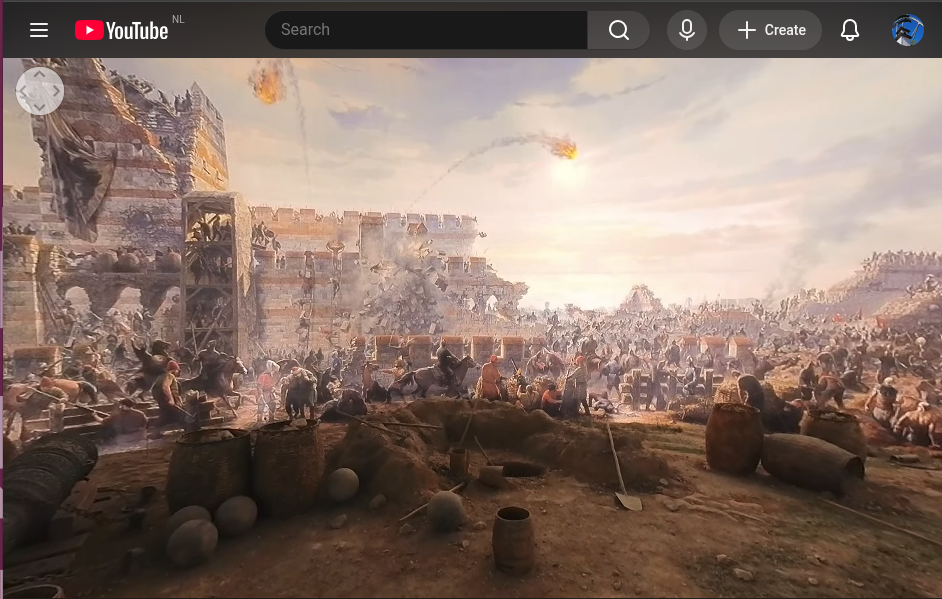
Having navigated the traffic, crowds, and hustle and bustle of Istanbul, you reach the Panorama 1453 Conquest and History Museum, where you step into a scene of a historic battle from centuries ago. With over ten thousand figures in a 360-degree painting and three-dimensional replicas of weapons and trenches in front of the viewing deck, the museum promises to let you experience the Conquest of Istanbul. Soldiers on horseback are ready to follow Sultan Mehmed the Conqueror’s order to charge. Cannons are firing; flames are everywhere.
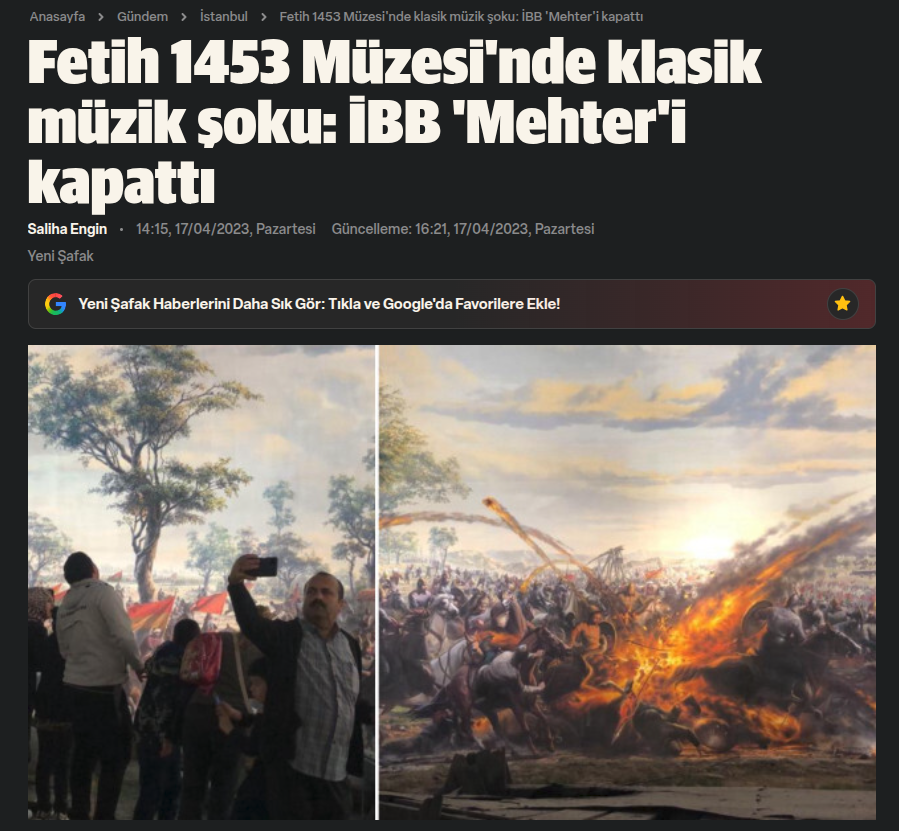
You would expect this visual spectacle to be accompanied by the mehter, a form of Ottoman military music commonly used in military reenactments in Turkey—and, indeed, the panorama was originally presented with a mehter-based soundscape (you can listen to what this sounds like by clicking on this video). Yet, for a period in 2023, visitors encountered something unexpected at the museum: classical music accompanied the panoramic experience. This new soundscape was introduced under the new directorship of the Panorama 1453 Museum, appointed by the Republican-led municipal government (CHP) following the 2019 local elections. Faced with immediate backlash from neo-Ottomanist political circles, the museum directorship quickly rescinded its decision within a few weeks and reverted to the original mehter soundscape.
In this blog post, I explain how such seemingly small choices for historical representation reflect broader political struggles over the Ottoman past in Turkey. With its evolving narratives about the conquest, the Panorama 1453 Museum offers a particularly revealing case to explore these struggles. By recovering inactive URL citations from the museum’s website and Turkish newspapers through the Wayback Machine (2008–2026), I examine how narratives about the Ottoman Conquest of 1453 evolved over time. The archive is especially useful here because it makes it possible to trace not only changes in the museum’s own presentation, but also shifts in how those changes were received and debated in the public sphere. In this sense, archived webpages reveal the changing meanings attached to the museum at different political moments.
Every nation has historical events that hold a contested place in its collective memory and the Conquest of Istanbul is a central event in narratives of Turkish national identity. For some, the conquest is the long-awaited Islamic victory in line with a hadith attributed to the Prophet Muhammad: “Verily, you shall conquer Constantinople. What a wonderful leader will he be, and what a wonderful army will that army be!” For others, it is a symbol of the Ottoman Empire’s military prowess and imperial outreach. For still others, who share secular nationalist sensibilities rather than religious or neo-Ottomanist ones, the conquest stands as a symbol of a violent and backward empire that held the Turkish nation back from progress. Over the past two decades, these competing interpretations of the conquest’s meaning have shaped contemporary Turkish politics, contributing to a deep cultural divide between the religious-conservative base of the Justice and Development Party (AKP) and the secular opposition, a divide that manifests itself in heritage sites like the Panorama 1453 Museum.
Funded by the Turkish Ministry of Culture and opened in a ceremony attended by then-Prime Minister Recep Tayyip Erdoğan, Panorama 1453 was designed to immerse visitors in the experience of the conquest. Archived versions of the museum’s website, recovered through the Wayback Machine, and contemporary news reports emphasized that visitors could feel as if they were in the midst of the 1453 battle; some reports also described visitors shouting ‘Allahu Akbar’ during the experience (see for example Haber7 and Yeni Şafak).
This approach presented the conquest not merely as a historical event but as a shared past to be experienced and to be proud of. As Gönül Bozoğlu argues in her book Museums, Emotion, and Memory Culture: The Politics of the Past in Turkey, the Panorama 1453 Museum allows visitors to establish emotional and imaginative connections with the Ottoman past and to experience the conquest as a part of their own collective identity. However, as Bozoğlu also demonstrates, the museum’s narrative of the conquest has never been accepted unquestioningly in Turkey, where competing secular interpretations of the Ottoman past have remained influential.
Archived news coverage recovered through the Wayback Machine shows that, since its opening, the museum has been the subject of both praise and criticism. Critics have argued that Panorama 1453 presents a one-sided account of the conquest. For example, one news report argued that the museum’s narrative prioritized military victory over historical accuracy. Examples of these criticisms included clothing allegedly not from Mehmed II's reign, the omission of moats in front of the city walls, and certain architectural details. On the other hand, there are news reports that argue that the museum contributes to history education, stating that an important historical event, such as the conquest of Istanbul, should not be learned solely from textbooks, and that it offers an opportunity for experiential learning, especially for children (see, for example T24’s reporting).
In contrast, another news report claimed that the museum presents the conquest of Istanbul in a way that “almost belittles the Byzantines” and emphasizes Turkish-Islamic identity. The Turkish columnist Ayşegül Karakülhancı, for example, criticized the use of sword sounds, cannon fire, and battle effects to evoke a sense of conquest, arguing that the museum creates a narrative that glorifies war.
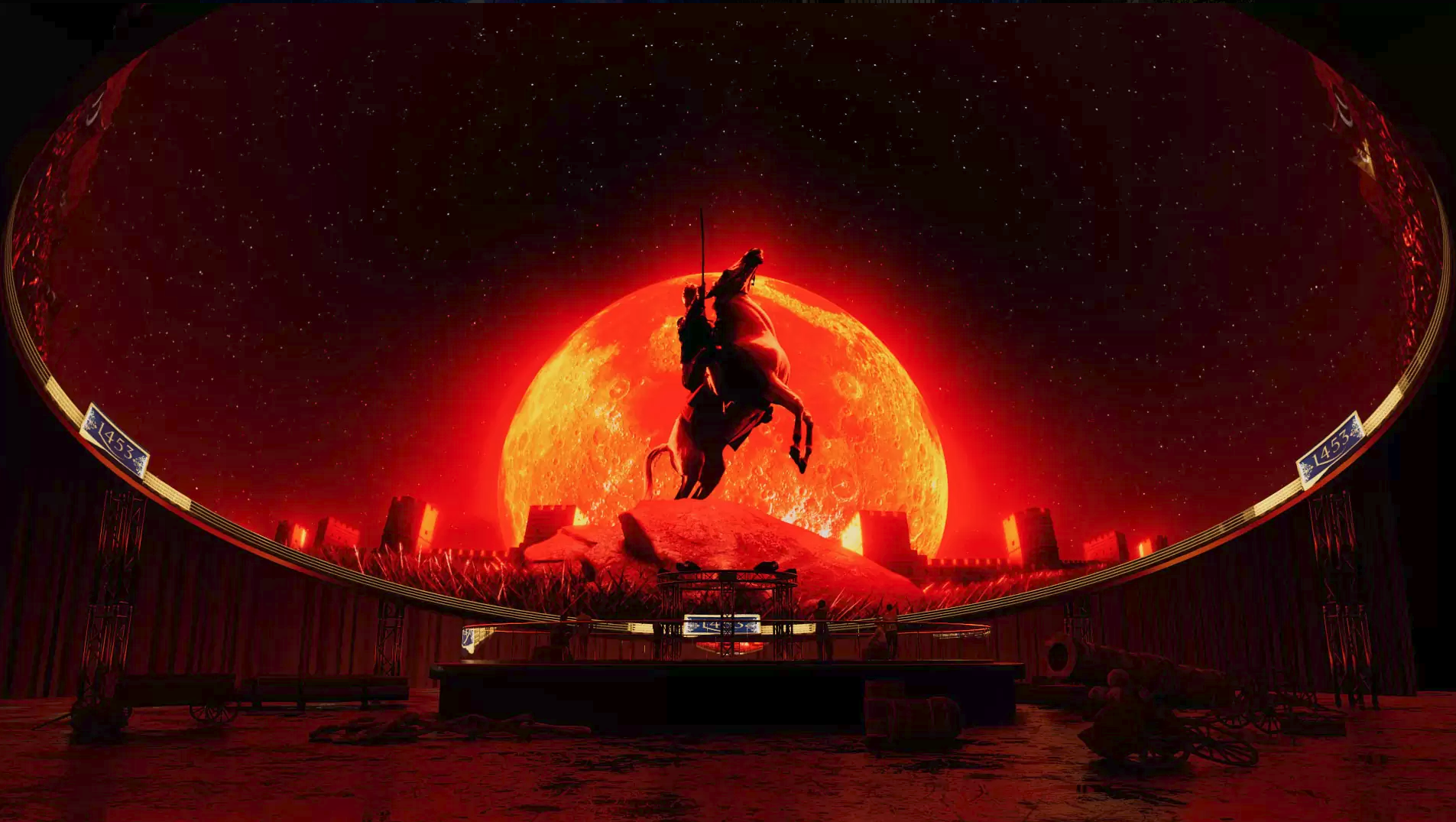
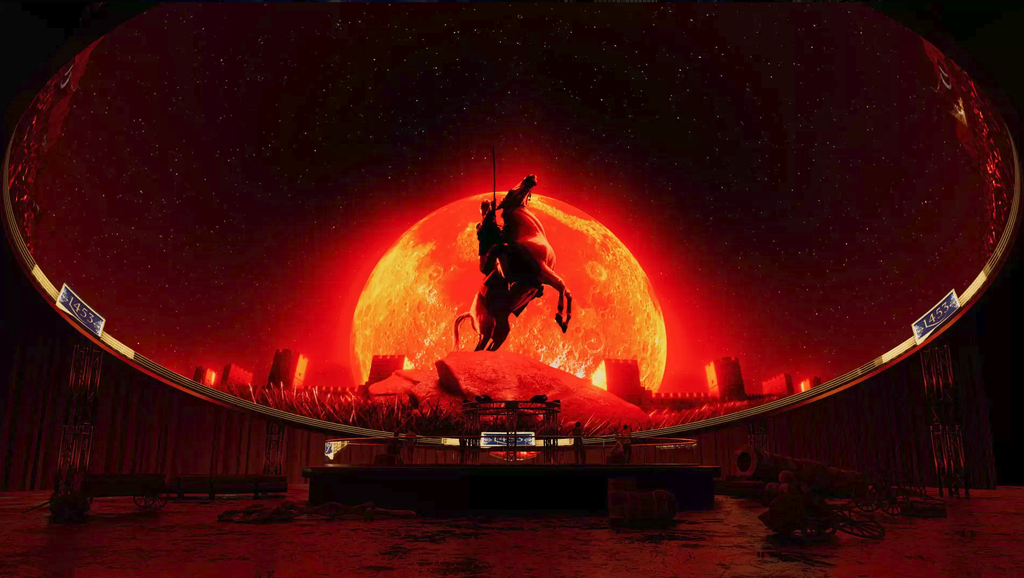
Following the 2019 municipal elections in Turkey, in which the main opposition party, the CHP, came out victorious in Istanbul, the management of Panorama 1453 was transferred to a new administration by the Istanbul Metropolitan Municipality for the first time in many years. Since then, the museum has introduced cultural activities and new exhibitions that can be understood as a sign of a moving away from the previous management’s openly neo-Ottomanist political agenda. For example, exhibitions themed around Atatürk and the National Struggle of the Turkish Republic (1919–23) were added to the museum, making the secular national histories of the Republic more visible. At the same time, the new administration continued to uphold the narrative of the conquest and the sensorial experience it offered to the visitors. In 2022 the museum introduced an immersive digital video exhibit “The Dream of Mehmed the Conqueror,” projected onto the panoramic dome to tell the story of Sultan Mehmet’s dream of conquering Istanbul.
In 2023, the museum became the permanent home of a rare bronze medallion featuring Mehmed the Conqueror, which was purchased by the CHP-led Metropolitan Municipality of Istanbul at an auction in London. The inclusion of this historical object into the museum collection can be taken as another example of the museum's continued engagement with its Ottoman past under the CHP’s new municipal administration.
Archived news coverage also reveals how the political dynamics surrounding the Panorama shifted under the new administration. Debates over the meaning and representation of Istanbul’s conquest continued to emerge around specific curatorial choices. A good example of this is when new management replaced the Ottoman mehter music and battle sounds at the panoramic exhibition with Western classical music without an official announcement in August 2023.
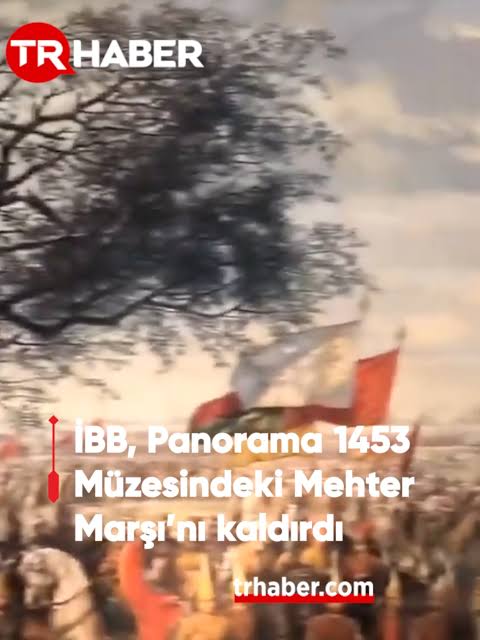
The backlash to the decision was prompt, with pro-AKP media outlets publishing condemnatory reports and visitors officially filing complaints with the museum. Some visitors argued that classical music broke the intended immersion and made them feel alienated from the visual spectacle depicting the conquest. Many argued that the original audio, with cannon blasts, Islamic chants, and the mehter songs were vital for them to feel the atmosphere. Within a few days, the museum management decided to walk back its decision and restore the original audio.
The changing soundscape of Panorama 1453 illustrates both how deeply contested the legacy of the conquest remains in Turkey and how seemingly minor elements of an immersive museum experience can become focal points of broader cultural struggles. It also shows how the new museum management has sought to renegotiate the foundational political and cultural legacy of a panorama project established under AKP rule.
In short, the story of Panorama 1453 offers a symbolic reflection of a contested past, a Turkey moving between conflicting cultural currents: the neo-Ottoman championing of mehter and the Western classical music that has long been upheld by Kemalism as a sign of Turkish progressiveness. In that sense, the transformations in the panorama museum reflect a broader struggle for memory in Turkey, beyond the political rivalry between the AKP and CHP, regarding how Turkey’s imperial past should be remembered and commemorated and who has the authority to do so.
Curious to learn more? We film our visits to the sites using 360-degree cameras. This allows you to experience what Panorama 1453 looks and sounds like today by clicking on the video below (drag your cursor or move your phone around to look in different directions):
 English
  Dutch
Dutch